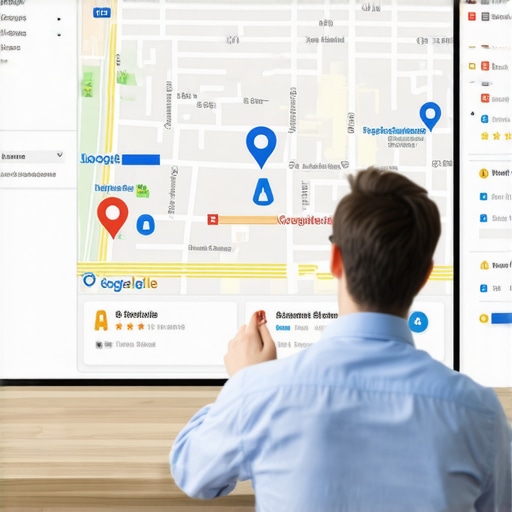
The Only Google Maps Ranking Checklist You Need to Audit Your Shop
In the current landscape of local search, being “near” your customer is no longer a guarantee that you will show up on their smartphone. I have spent years as a Google Business Profile Product Expert, and if there is one thing I’ve learned, it’s that proximity is just the starting line. To actually win the race, your business must master the three pillars of local SEO: Proximity, Relevance, and Prominence. Many shop owners feel “ghosted” by Google, watching competitors from three towns over leapfrog them in the local Map Pack. This isn’t bad luck; it’s a failure of the digital entity to communicate its value to Google’s algorithm.
As we move toward 2026, the algorithm is becoming increasingly sophisticated, shifting from simple keyword matching to complex entity-based understanding. This google maps ranking checklist is designed to be your definitive audit tool. Whether you are a plumber, a high-end law firm, or a local dental practice, these steps will help you dismantle the “proximity walls” and establish your shop as the authoritative choice in your region. My name is Kevin Pauls, and I’m here to walk you through the exact framework I use to help my clients dominate their local markets.
Phase 1: The Foundational Profile Audit (Relevance)
The first step in any rank google business profile strategy is ensuring your foundational data is bulletproof. Google uses your Google Business Profile (GBP) as the “source of truth” for your business entity. If this data is messy, inconsistent, or thin, your relevance score will plummet.
The NAP Integrity Test
Your Name, Address, and Phone number (NAP) must be identical across the web. However, the biggest mistake I see is keyword stuffing the business name. While adding “Best Plumber in Dallas” to your name might give you a temporary boost, it is a high-risk move for a permanent suspension. Stick to your legal business name unless you have a DBA that says otherwise. Consistency is what builds the trust necessary for a high-ranking profile.
Primary and Secondary Categories
Your primary category is the single most important ranking factor on your profile. It tells Google exactly what you are. If you are an HVAC company, your primary category should be “HVAC Contractor,” not “Air Conditioning Repair Service” (unless that is your only focus). You can then use secondary categories to capture the rest of your service offerings. According to 2025 research, “Google Business Profile Completeness” remains a high-weight factor. A profile that utilizes all 10 available category slots (where relevant) will always outperform a sparse one. For more on how specific industries tackle this, see How HVAC Teams Win the Neighborhood Map Pack Without Spending a Fortune.
The Services Menu and Descriptions
- Audit the Services List: Don’t just check the boxes Google suggests. Manually add custom services with 300-character descriptions. These descriptions are indexed and help Google understand your google business profile seo relevance for long-tail searches.
- Avoid Duplicate Services: Ensure you aren’t confusing the algorithm by listing the same service under three different names.
- Price Points: If your industry allows, add “Starting at” prices to increase transparency and click-through rates (CTR).
Phase 2: The Proximity & Service Area Audit
Proximity is often the most frustrating ranking factor because you cannot change where your shop is located. However, you can influence how Google perceives your “reach.” Many businesses hit a “Proximity Wall” where their rankings drop off a cliff just two miles from their office.
Dismantling the Proximity Wall
Google determines searcher intent based on physical location. If a user is standing in a specific neighborhood, Google wants to show them the most relevant local option. To expand your reach, you must prove to Google that your “Entity” is relevant to the surrounding neighborhoods. This is a core component of google business profile seo. If you find your rankings are stagnant, you may be hitting The Proximity Wall: Why Your Map Rank Dies at the Edge of Your Neighborhood.
Service Area Business (SAB) Settings
- Visible vs. Hidden Address: If you have a physical shop where customers walk in, keep your address visible. If you are a mobile service, hide it. Never use a P.O. Box or a virtual office; Google’s AI is now incredibly adept at spotting these and will suspend your profile instantly.
- Radius Management: Do not set your service area to a 100-mile radius. This dilutes your local relevance. Limit your service area to the locations you can actually serve within 30-45 minutes. Google values “hyper-local” over “vaguely regional.”
- Neighborhood Mentions: Mention specific neighborhoods in your business description and your website’s local landing pages to signal to Google that your service area is wider than your front door.
Phase 3: The Visual & Engagement Audit (Prominence)
Prominence is Google’s way of measuring how “important” your business is in the real world. One of the fastest ways to signal prominence is through high-quality, geo-relevant imagery. Stock photos are the “kiss of death” for local rankings; they kill customer trust and provide zero SEO value.
The Power of Geo-Relevant Photos
Google uses machine learning (Cloud Vision AI) to “read” your photos. If you upload a photo of your team working in front of a recognizable local landmark or a street sign in your target neighborhood, Google associates your business with that location. This is a massive “shortcut” to improving your local seo audit results.
Checklist for Visual Content:
- Owner-Uploaded Photos: You should be uploading at least 2-3 new photos per week. These should include the exterior of your shop, your team in uniform, and completed projects.
- Customer Photos: Encourage customers to upload photos with their reviews. These carry more “weight” in the prominence algorithm than owner photos.
- Video Shorts: In 2026, video is a primary ranking signal. Upload 30-second clips of your “behind the scenes” process. This increases dwell time on your profile, which signals to Google that users find your content valuable.
- The “Update” Frequency: Consistent posting isn’t just for social media. Regular updates on your GBP keep your profile “fresh” in the eyes of the algorithm. For a deeper dive into this, read The Photo Update Shortcut That Doubled Our Google Maps Call Volume in a Month.
Phase 4: The Review & Reputation Audit
Most business owners think that having a 5-star rating is enough. It isn’t. In fact, a perfect 5.0 with no recent activity can actually look suspicious to Google’s spam filters. To improve google maps ranking, you need a strategy for review velocity, diversity, and keyword integration.
The “Trust Test” and Review Velocity
Review velocity refers to how often you get new reviews. If you got 50 reviews three years ago and nothing since, Google considers your business “stale.” You need a steady “drip” of reviews to maintain prominence. However, be careful – buying reviews or getting 20 in one day after months of silence can trigger a filter. Interestingly, Why Some Five-Star Reviews Actually Hurt Your Local Search Ranking explains how non-descript “Great job!” reviews provide less value than a 4-star review with detailed text.
Checklist for Reviews:
- Keyword-Rich Reviews: Encourage customers to mention the specific service they received (e.g., “best emergency drain cleaning”) and the neighborhood they are in. Google scans these reviews for “justifications” to show your business in the Map Pack.
- Response Speed: You should respond to every review – positive or negative – within 24 hours. This signals to Google that you are an active, managed entity.
- Professional Management: If you are struggling to maintain this, using a google maps ranking service can help automate the request and tracking process.
Phase 5: Technical & Off-Page Signals
Your Google Business Profile does not live in a vacuum. It is tethered to your website. If your website is slow, not mobile-friendly, or lacks local signals, your Map rank will suffer regardless of how good your profile looks. This is where the technical side of a google maps ranking checklist comes into play.
Local Business Schema Markup
Schema markup is a piece of code that tells search engines exactly what your data means. Using “LocalBusiness” or more specific schema (like “PlumbingService”) helps bridge the gap between your website and your GBP. It confirms your NAP data and links your social profiles to your business entity. This is one of the most underutilized local seo tools in the small business arsenal.
Checklist for Off-Page SEO:
- Location Pages: If you serve multiple cities, create dedicated landing pages for each. Link these pages directly from the “Website” button on your GBP if that profile specifically serves that area.
- NAP Consistency: Use a tool to audit your citations on Yelp, Yellow Pages, and Apple Maps. Discrepancies in your phone number or suite number can cause “ranking friction.”
- Local Backlinks: A link from a local high school, a neighborhood blog, or a local chamber of commerce is worth ten links from a generic national site. These “hyper-local” links prove your physical relevance to the area.
- Tool Integration: Utilizing professional local seo tools can help you track these citations and backlinks without manual searching.
Phase 6: Future-Proofing for 2026 (AI & Real-Time Signals)
The future of Google Maps is not just a list of pins; it is an AI-driven search agent. Google’s Search Generative Experience (SGE) and AI Overviews are now pulling data directly from GBP attributes to answer complex queries like “Where can I find a kid-friendly Italian restaurant with outdoor seating that is open now?”
AI-Summary Optimization
Google now creates AI-generated summaries of your business based on reviews and your “About” section. To optimize for this, ensure your “Attributes” (e.g., “Wheelchair accessible,” “Free Wi-Fi,” “Veteran-owned”) are completely filled out. These verified attributes are high-priority data points for AI search agents. You can learn more about this in 3 Local Search Ranking Factors AI Won’t Let You Ignore in 2026.
Checklist for 2026 Readiness:
- Real-Time Inventory: If you are a retail shop, integrate your “Point of Sale” (POS) system with Google. Showing that a product is “In Stock” is a massive ranking signal for “near me” product searches.
- Booking Integration: Use the “Reserve with Google” feature. The more actions a user can take without leaving the Google ecosystem, the more Google will favor your profile.
- Rank Tracking: Use a google maps rank tracker to see how your “grid” of rankings changes in real-time across different neighborhoods. This allows you to spot where your proximity wall is and adjust your strategy accordingly.
Conclusion & The “What Now?” Strategy
Conducting an audit using this google maps ranking checklist is the first step, but the real growth happens in the execution. Local SEO is not a “set it and forget it” task. It is a monthly commitment to maintaining relevance and prominence in an increasingly crowded digital landscape.
If you have gone through this checklist and realized your profile is lacking, don’t panic. Start with Phase 1 and 2. Fix your categories, clean up your NAP, and define your service area. Once the foundation is solid, move into the visual and review phases to build prominence. Remember, Google wants to show the best result to its users. If you prove – through data, photos, and customer feedback – that you are the best, Google will have no choice but to rank you at the top.
For those who want to take their visibility to the next level, I recommend looking into professional local seo tools to automate the tedious parts of citation building and rank tracking. If you need a more personalized deep-dive, feel free to reach out to me, Kevin Pauls, for a professional audit of your Google Business Profile. Let’s break down those proximity walls and get your shop the visibility it deserves.