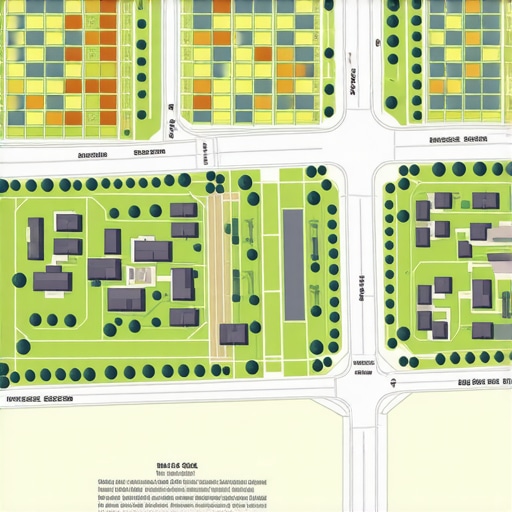
The Proximity Wall: Why Your Map Rank Dies at the Edge of Your Neighborhood
You’ve seen it happen. You’re sitting in your office, you pull out your phone, search for your primary service, and there you are – Number One in the Google Map Pack. You feel a surge of pride. But then, you drive three miles down the road to grab lunch, perform the same search, and your business is nowhere to be found. It’s as if your digital presence was swallowed by the pavement. This is the “Proximity Wall,” a frustrating phenomenon where google business profile seo efforts seem to hit an invisible boundary at the edge of your immediate neighborhood.
As a Google Business Profile Product Expert, I see this daily. Business owners assume that if they are the “best” choice, Google will show them to everyone in the city. However, the local algorithm is built on a specific triad: Relevance, Distance, and Prominence. While you can’t move your physical building, understanding the infrastructure of local search allows you to “stretch” your radius and break through the wall that keeps your competitors winning just a few blocks away.
The Three Pillars of Google Maps Rankings: Why Distance Isn’t Everything
To understand why the Proximity Wall exists, we must look at how Google defines local ranking. According to official Google documentation and extensive industry research, three main factors determine your position: Relevance, Distance, and Prominence.
Relevance is how well a local business profile matches what someone is searching for. If your google business profile seo is dialed in, Google understands exactly what you do. Distance is exactly what it sounds like – how far each potential search result is from the location terms used in a search. If a user doesn’t specify a location, Google calculates distance based on what they know about the user’s location. Finally, Prominence refers to how well-known a business is. This is based on information that Google has about a business from across the web, like links, articles, and directories.
The Proximity Wall occurs when the “Distance” factor outweighs Relevance and Prominence. In high-density areas or highly competitive niches, Google’s algorithm defaults to the closest option to provide the fastest solution for the user. However, as Rashid Rehman famously noted, “Local SEO isn’t marketing; it’s infrastructure.” If you build a stronger digital infrastructure, you can force the algorithm to prioritize your Prominence over a competitor’s mere physical proximity. To measure this balance effectively, savvy marketers use local seo tools from seovipertools.com to visualize how their prominence decays as distance increases.
The goal is to increase your “relevance” and “prominence” to such a degree that Google is willing to show your business to a user who is 5, 10, or 20 miles away, even if there is a closer (but less prominent) competitor. This is the essence of advanced google business profile optimization.
Why Your Business “Ghosts” Customers Two Blocks Away
The “Geographic Buffer” is a technical reality of the modern Map Pack. For many businesses, especially those in the legal or home services sectors, the ranking radius is getting tighter. Google’s “Near Me” filter has become incredibly aggressive. If you are a personal injury lawyer, you might find that the reason your law firm’s map rank stops right at your office parking lot is that Google perceives the “market” for legal services in your city to be hyper-local.
This “ghosting” happens because Google is trying to minimize the friction of the user experience. If there are twelve HVAC companies within a five-mile radius, Google has no incentive to show a company seven miles away unless that company has significantly higher Prominence. For contractors and lawyers, this creates a “winner-takes-the-block” scenario. If you aren’t actively working to stop map profile drops, your visibility will naturally shrink as new competitors enter the local space and claim their own small proximity bubbles.
The technical concept here is the “centroid.” Historically, Google ranked businesses based on their distance from the city center. Today, the centroid is the user’s mobile device. This means the Proximity Wall is not a fixed circle around your office; it is a moving target that shifts with every potential customer. If your local map pack seo isn’t designed to project authority across multiple “user centroids,” you will remain a neighborhood secret rather than a city-wide leader.
Auditing Your Wall: How to See Where You Disappear
You cannot fix what you cannot see. Most business owners audit their own rankings by searching on their phones while sitting at their desks. This is a massive mistake. Because Google knows your search history and your exact IP location, it will almost always show you your own business. This creates a “false positive” that leads to complacency.
To truly understand the extent of your Proximity Wall, you need a google maps rank tracker. These local seo tools, such as those found at seovipertools.com, allow you to run “grid searches.” A grid search places hundreds of virtual pins across a map and performs a search from each pin. The result is a heat map: green where you rank in the top 3, and red where you are buried on page two or three.
Once you have this visual data, you can identify exactly where the wall is. Is it a hard line at a specific highway? Does your rank drop off specifically when you cross into a different zip code? This data is the foundation of a google maps ranking service strategy. Without it, you are flying blind. By identifying the “fringe” areas – places where you are currently ranking #4 or #5 – you can target your optimization efforts to push those areas into the “Green Zone” (the Top 3 Map Pack).
Breaking the Wall: 3 Strategies to Expand Your Map Radius
Expanding your reach requires a shift from “general SEO” to “geo-spatial SEO.” You must prove to Google that your business is not just *located* in a spot, but that it is *relevant* to the surrounding areas. Here are three high-impact strategies to improve google maps ranking across a wider territory.
Strategy 1: Hyperlocal Content and Geo-Signals
Google’s algorithm looks for “geo-signals” to associate your business with specific locations. If your website only mentions your main city, you are missing out. You need to create content that mentions specific neighborhoods, landmarks, and even local intersections. This is where the simple move that makes city pages rank without a physical office comes into play. By building robust, helpful pages for nearby suburbs or neighborhoods, you create a “relevance bridge” that extends your proximity.
Strategy 2: Geo-Targeted Reviews
Not all reviews are created equal. A review that says “Great service!” helps your Prominence slightly. However, a review that says, “They arrived on time at our home in [Neighborhood Name] near [Local Landmark] and fixed our AC,” is gold for google business profile seo. These reviews provide Google with third-party verification that you operate in those specific areas. Encourage your technicians or staff to ask customers to mention their neighborhood or the specific service performed in their review. This helps Google’s Natural Language Processing (NLP) engine connect your profile to those geographic coordinates.
Strategy 3: Local Backlink Infrastructure
To rank google business profile higher, you need local authority. Standard SEO focuses on “high DA” links from national sites. Local SEO focuses on “high relevance” links from within your community. A link from a local neighborhood association, a high school sports sponsorship page, or a local news blog carries more “geographic weight” than a generic guest post. This infrastructure signals to Google that you are a pillar of the local community, which naturally increases your Prominence and allows you to outrank closer competitors who lack those local ties. Utilizing professional google maps seo tools from seovipertools.com can help you identify where your competitors are getting their local signals.
Service Area Business (SAB) Secrets: Ranking Without a Storefront
For Service Area Businesses (SABs) like plumbers, roofers, and landscapers, the Proximity Wall is even more daunting because they often lack a public-facing physical office. Many SAB owners make the mistake of setting their service area to a 50-mile radius in their Google Business Profile. While this tells Google where you *want* to work, it does not give you the authority to rank there. In fact, setting a radius that is too large can actually dilute your local authority.
Google values “Proof of Location.” Even if your address is hidden, the algorithm still uses your verified physical location (the one you used for the postcard) as the center of your proximity bubble. To expand this, you must focus on the mistakes highlighted in what local lawyers (and contractors) get wrong about service areas. Instead of claiming a massive territory, focus on dominating one “cluster” of zip codes at a time. Use google business profile optimization to upload photos of your team working in different parts of the city. Geotagged images (though Google strips EXIF data, they still use the visual landmarks and AI to recognize location) provide the “proof” Google needs to trust your presence in distant neighborhoods.
Preparing for 2026: The Future of the Proximity Filter
The local search landscape is evolving rapidly. As we move toward 2026, the proximity filter is expected to become even more sophisticated, integrated with AI search agents and real-time data. We are seeing a shift where Google prioritizes “verified attributes” and “real-time store traffic” over static business descriptions.
To stay ahead, businesses must adopt 5 business SEO techniques to beat the 2026 proximity filter. This includes maintaining an active “Local Inventory” feed and ensuring your profile is updated with real-time service availability. AI search agents will likely favor businesses that provide the most granular, real-time data. If your profile is static, you will find your Proximity Wall closing in. If your profile is dynamic and data-rich, you will be the one “stretching” your reach into your competitor’s backyard.
Conclusion: Scaling Your Local Reach
The Proximity Wall is a formidable challenge, but it is not an absolute barrier. By understanding that google business profile seo is a game of balancing Distance with extreme Relevance and Prominence, you can begin to expand your digital footprint. Don’t let your ranking die at the edge of your parking lot. Audit your current visibility, build your hyperlocal content infrastructure, and leverage google maps ranking service strategies to claim the territory you deserve.
Ready to see where your wall is? Use a professional google business profile audit tool and explore the suite of google maps seo tools at seovipertools.com to start scaling your local reach today. The map is yours for the taking – if you have the right infrastructure.